Steve's Camaro Parts

Steve's Camaro Parts
Showing posts with label chevrolet camaro. Show all posts

Monday, May 19, 2014

1967 - 1969 Camaro Parts - Driving the 1969 Chevy Camaro Z/28 and its 2014 successor, for history - Steves Camaro Parts San Bruno - 650-873-1890

Chevrolet Camaro Z/28


“If this storm hits, we’re screwed. I don’t mind the raindrops,” he said, “but what concerns me is getting the underside all messed up with dirt.”

Chevrolet Camaro Z/28

A Carolina Blue, 1969 Chevrolet Camaro Z/28, the only one of its kind in existence, shone under the bright lights at Mecum Auctions in Indianapolis. It was rolling onto the auction block in just 48 hours – expected to fetch around $400,000 – so I could appreciate Mecum’s concerns. I looked at my watch. It read 8 a.m.: “When is this storm due to hit?” I asked.

Chevrolet Camaro Z/28

“Now, so you should probably get out there,” I was told. “By the way, where’s this brand-new Z/28 at?”
Few cars drew as much excitement as when Chevrolet announced the rebirth of its iconic moniker. That was over a year ago now, and yet production is only just beginning. Engineers have treated their new baby like a fine wine – requiring a seasoned mouthful of fillet and a slow decant to remove unwanted sediment. And this unhurried, methodical process worked, as I discovered for myself a handful of weeks ago at the Barber Motorsports Park in Alabama. From behind the wheel, the 2014 Camaro Z/28 astonishes.

The ’69 Z/28, however, remains a machine many deem to be one of the greatest muscle cars of them all – a roaming billboard of red, white and blue; Hendrix embodied in metal. The fine folks atMecum Auctions allowed me to test-drive the legendary car, while I brought along its modern-day counterpart for comparison. It was set to be a once-in-a-lifetime experience, but it would all be for nothing if I didn’t beat this blasted rain. 

Chevrolet Camaro Z/28

I trailed Mecum’s chief mechanic aboard a black golf cart – all the while inhaling the 69’s pungent fumes and humming “Lay Lady Lay” uncontrollably. We pulled over on a quiet road, and while I got myself settled behind the wheel, I was offered words of wisdom from the man that had tuned her up ready for auction: “Just baby the throttle, but keep the revs up,” he said. “Like any old car, she’s temperamental, but she runs real sweet.”

There’s something about an old V-8 that transports you back in time. It was Woodstock, Aug. 15, 1969. 500,000 unkempt youths, high on life, rocking to the likes of Jimi, Joplin, and The Who. The 302 cubic-inch motor roared, and I imagined Neil Armstrong’s giant leap, military jackets festooned in peace signs, and headbands shielding wild, unruly hair. Those that lived that glorious era were blissfully unaware that just a few years later – after skyrocketing fuel prices, insurance hikes and stifling EPA mandates – that era was about to end.

When the Z/28 returned in 1977, long gone was the 350 hp V-8, replaced by a lump maxing out at just 185 hp. Times had changed, and car culture has never been the same since. 


For 2014, Chevrolet promised to do justice to the original Z/28. A suitable 7.0-liter V-8 found its way under the hood, pushing 505 hp. Air conditioning and a stereo became a $1,500 option; carbon ceramic brakes arrived standard, as did special Multimatic dampers. The tires were near-slick race rubber, because the Z/28 was always intended to be a racecar for the street.

Named not after a wild horse or toothy fish, the Z/28 moniker was merely a production order number (RPO Z28, following the Camaro SS which was Z27). Vincent Piggins, a veteran Chevy engineer and the man behind the Hudson Hornet’s NASCAR championships from the ‘50s, was responsible for convincing company execs of the need for such a performance car.

In 1966, SCCA created the Trans-Am sedan class, aimed at the ’67 season. Piggins spoke with SCCA officials and confirmed Chevrolet’s involvement. Due to their rear seats, pony cars could qualify as "sedans," meaning all Piggins had to do was get his boss to see his vision. A 327 block featuring a 283 crank, providing a displacement of 302.4 to sneak under the SCCA’s 305 cubic inch limit, was all it took to score a green light.

The Z/28 was born, and as of January 1, 1967, the car began homologation with the FIA as a Group II racecar.
----------
Shifting through the Rock Crusher 4-speed manual gearbox, using the Cross Ram induction and dual Holley four-barrel carburetors to maximize grunt, it’s said the 1969 Z/28 pushed 290 hp. In reality, it surpassed 350 hp. The steering felt vague on center, while at slow speeds, my shoulders ached as I manhandled the non-assisted wheel. We all lament over how electric power steering diminishes the feel you get through the tires, up the column, and into your fingertips. But the precision and speed of today’s racks make me think that much of that grievance is down to a lack of memory.

But I enjoyed the weight of the wheel, and the heavy clutch. When I came to the end of the short stretch of road I was permitted to drive on, I slipped the gear lever into reverse, requiring a few stabs and jiggles for it to engage. I then rolled my right ankle off the brake pedal and onto the throttle – in a desperate effort to keep the motor alive.

At first, with every stop, it stalled. But as my drive continued, I began to learn its quirks and nuances. I’d keep it in gear as long as I could, bobbling along at 3 mph. I engaged reverse before coming to a complete stop, and then moved my foot from the brake to the gas pedal while holding the car steady via the clutch (the pedals were too far apart for proper "heel and toe"). I depressed the gas pedal more swiftly so as to relieve the weary clutch from its duties, and by doing so, I eliminated the stall most every time. You needed to move fast in this car, and yet I envisaged every ’69 Z/28 being different, requiring an alternate strategy. I imagined it as a living, breathing organism. I imagined it as a friend. 

When slipping behind the wheel of the all-new Z/28, I immediately lurched off the line like a teenager driving for the first time. I was used to the '69's weighty clutch; my left leg was like a heavy metal anchor, too cumbersome to control. I then dabbed the brakes, only to narrowly miss smacking my head on the wheel. It appeared my right leg had suffered a similar curse.

A 2014 Z/28’s carbon brakes aren’t grabby; in fact they’re one of the best systems on any production car, helping make its $75,000 price tag a relative steal (note: “relative”). Never would one describe a 2014 Z/28 as comfortable; even Chevrolet says it’s not suited to the street. But after driving the ’69, which wasn't uncomfortable itself, the older brother felt very comfortable, somewhat docile, and yet still passionate and engaging at the same time.

Of course it wasn’t docile, but my senses had been tricked. I did wonder, however, why we have such an obsession with a Rolls-like ride quality and noise-proof interiors. We’re all spoiled, as if we wish to drive swathed in bubble wrap. It felt so refreshing to be in a modern-day car that was unruly, agitated and ferocious. This new Z/28 felt like a dying breed – one that must be treasured.

The V-8’s roar was familiar; the square dials on the dash, too, were reminiscent of those found in the ’69. It’s the first Z/28 in decades that I’ve cared for. And while it handles far more like a sports car than a traditional muscle car, you can feel that burliness within.

The ’69 was all brute strength. There was no finesse, or glamor. It was a car for blue-collar workers – the heart of America. This particular Z/28 was unrestored, bar a lick of paint in the early ‘90s. The first owner, Lyle Mader of Madison, S.D., spec’d out the car to $4,720.50. On June 20, 1969, it left the Norwood, Ohio, factory on route via train to Rapp Chevrolet in Marion, S.D. During a lengthy rest stop, thieves climbed aboard the train and spotted the baby blue Z/28, with its twin stripes flowing over the rear wing like a Yosemite waterfall. The Cross Ram induction was stolen, along with its 8-track tape player. The original, handwritten note from the shipping company to the dealership stating the crime is still in the glove compartment. By the time Mader took delivery, the dealership had of of course returned it to its intended state. And at Mecum Auctions, a new chapter in its history will be written.

Against all odds, the storm set to hit Indianapolis that day held off – perhaps a gift from the gods, or simply proof that meteorologists are rarely correct. I returned to base, parking the ’69 on its stand ready for sale, with no more than a drop of fuel left in the tank.

This test was not about performance, or speed, or whether old school tops new school. It was about celebrating a glorious era of motoring (and I include Hemi Cudas, GT350s, GTOs, and all the other greats in that statement). Cars like the 2014 Camaro Z/28 fight to keep that legacy alive. While those lucky enough to live it won’t ever forget.

That day, I got my fill of nostalgia. It was August 15, 1969. Hendrix was electrifying Woodstock. And I was in a Z/28, with not a care in the world.

source: motoramic
by Alex Lloyd


YOU ARE NOT JUST BUYING PARTS – YOU ARE GETTING OUR CAMARO EXPERTISE

Tags: camaro part, camaro parts, Camaro restoration parts, 69 camaro, 1969 camaro, aftermarket camero parts, chevrolet camaro, ss, z28, rs, chevrolet, restoration, 68 camaro, chevy, 67, 69, f-body, camaro, chevy camaro, chevrolet camaro, gm, z-28, 350, ls1, z/28, pace car, camaro ss, 69 camaro, first generation, copo, fbody, yenko, 67 camaro, 68 camaro, musclecar 

http://www.stevescamaroparts.com

Friday, April 11, 2014

1967 - 1969 Camaro Parts - 1969 Camaro Pace Car - Steve's Camaro Parts - 650-873-1890


1969 marked the second time in three years that the Camaro was chosen as the official Pace Car of the Indianapolis 500 mile race.  Selection of any model as the Official Pace Car provides the auto manufacturer with an unusual opportunity for publicity. Yet in the prior years, the Big Three auto companies failed to make the most of this opportunity, concentrating instead on providing a limited number of Pace Car replicas to journalist and some advertising.  in 1969, Chevrolet was determined to turn the Pace Car selection into a major marketing achievement.  After all, this was 1969 and auto sales were beginning to slump along with the  general economy.  to make matters worse, the highly profitable  musclecar field was becoming extremely competitive.  Highlighting the Camaro as the Pace Car would be a sure way to grab attention.

RPO Z11 was born.  This " Indy sport convertible"  was made available on February 4, 1969 and allowed the public to purchase a replica of the actual Pace Car. All together, there would be 3,675 Camaros produced under the Z11 option as Pace Car replicas.

All Pace Car convertibles were Dover White SS/RS convertibles with the base options included in either of these packages, such as front disc brakes and the base 350/300 hp engine. There were several specific exclusions:


  • Rocker panels were painted white in lieu of black
  • The SS side hockey stripes (D90) were deleted and hood and deck lid Hugger Orange pain stripes were added (same as Z/28 pattern)
  • The rear panel remained white on 396 cubic inch cars rather than painted black.
  • The RS fender stripes were to be painted Hugger Orange. 
In addition to the above, all Camaros with the Pace Car option included an orange houndstooth custom interior and were mandated to have a cowl induction hood and rally wheels.  These "mandatory" features were billed on the dealer invoice separately.  One last item included in the Z11 INdy Sport option were the Pace Car graphics which were shipped in the trunk and installed at the dealership upon customer request. Thus, not all Pace Cars were sold new sporting the Pace Car decals.

souce: the 1969 Camaro Reference book
by John R. Hooper

http://www.stevescamaroparts.com


YOU ARE NOT JUST BUYING PARTS – YOU ARE GETTING OUR CAMARO EXPERTISE

Tags: camaro part, camaro parts, Camaro restoration parts, 69 camaro, 1969 camaro, aftermarket camero parts, chevrolet camaro, ss, z28, rs, chevrolet, restoration, 68 camaro, chevy, 67, 69, f-body, camaro, chevy camaro, chevrolet camaro, gm, z-28, 350, ls1, z/28, pace car, camaro ss, 69 camaro, first generation, copo, fbody, yenko, 67 camaro, 68 camaro, musclecar 


http://www.stevescamaroparts.com

Friday, March 7, 2014

Classic Camaro Parts - 1967 Camaro Steering - Steves Camaro Parts San Bruno - 650-873-1890

The 1967 Camaro is equipped with an Energy Absorbing Steering Column.  The Column is engineered to sequentially break away from the instrument panel and telescope, after a predetermined pressure is exerted on the steering wheel. (fig. 36)


The steering column is constructed so that the mast jacket, shift tube and steering shaft will collapse individually under various front impact conditions.  An expanded metal section at the mast jacket, located below the instrument panel permits the column to collapse.  The steering shaft is a multiple-piece design having a flattened oval upper shaft staked in a hollow lower shaft.  The shifter tube is fabricated from three separate sections. Unitizing of the steering shaft and the shifter tube is achieved by injecting plastic into adjacent cavaities in each part.

To function as an energy absorbing column, the column must be free of its attachment at the instrument panel and firmly held at the bottom end.  The column-to-instrument panel retaining bracket is shear mounted to the instrument panel.

The steering column-to-instrument panel retaining bracket is rigidly fastened to the mast jacket. The bracket is bolt attached to the insturment panel through retainers which are an integral part of the bracket.  Retainers are integral with the bracket through an injection molding process which forms plastic shear-pins.  Controlled release of the column is established by a predeterminded load being placed on the shear pins.  Located in open-ended slots in the bracket, the retainers serve as a guide to allow the column to move in a downward direction.

Servicing the Energy Absorbing Steering Column (fig 37) can be accomplished easily. You should be aware that only the specified screws, bolts and nuts be used as designated during reassembly, and the the bolts are tightened to specified torques. this precaution will ensure that the energy absorbing characteristics are not destroyed.  Care should also be exercised to ensure that overlength bolts are not used, as they may prevent the assembly from compressing under impact.


When the column is installed in a vehicle, it is no more susceptible to damage through usage than an ordinary column; however, when the column is removed from the vehicle special care must be exercised in handling.  Such actions as a sharp blow on the end of the steering shaft or shift levers, leaning on the column or dropping the assembly could shear or possibly loosen the plastic fasteners that maintain column rigidty and therby destroy future utility. It is important that the service procedures be carefully followed.

source; Chevrolet Service News Volume 38  September - October 1966  Number 9


No Other Camaro Supplier in the Business Comes Close to Our Selection.  We have been serving the Camaro Community since 1976 and Supplying Camaro Parts since 1981.

 YOU ARE NOT JUST BUYING PARTS – YOU ARE GETTING OUR CAMARO EXPERTISE


Tags: camaro part, camaro parts, Camaro restoration parts, 69 camaro, 1969 camaro, aftermarket camero parts, chevrolet camaro, ss, z28, rs, chevrolet, restoration, 68 camaro, chevy, 67, 69, f-body, camaro, chevy camaro, chevrolet camaro, gm, z-28, 350, ls1, z/28, pace car, camaro ss, 69 camaro, first generation, copo, fbody, yenko, 67 camaro, 68 camaro, musclecar, second generation

http://www.stevescamaroparts.com

Tuesday, January 14, 2014

1967 - 1969 Camaro Parts - 1967 Camaro from Hawaii - Steve's Camaro Parts - 650-873-1890


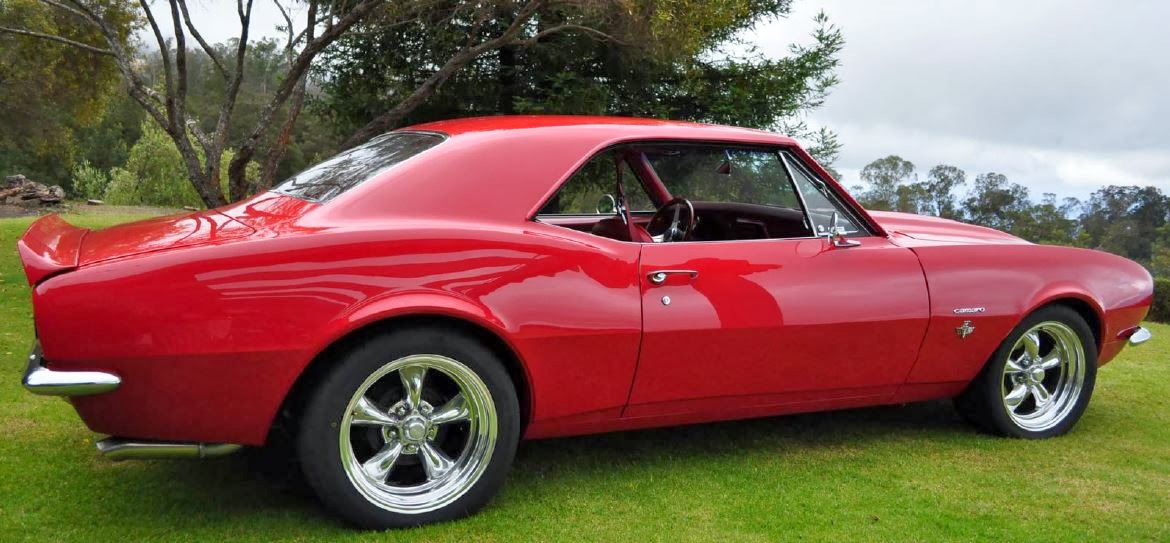
 This 1967 Camaro started out as a “plain Jane” 67 with a 327 SBC.  It’s now a pro-touring resto-mod with the same numbers matching 327 that’s been souped up. Still has the original Carter AFB 4 barrel carb.   It is raced at Maui Raceway park  where it does mid to high 12’s.  All the work except engine machining was done by Steve in his garage including the paint and bodywork. The interior is redone but completely stock except the floor mounted speed shifter connected to a TH350.
No Other Camaro Supplier in the Business Comes Close to Our Selection.  We have been serving the Camaro Community since 1976 and Supplying Camaro Parts since 1981.

 YOU ARE NOT JUST BUYING PARTS – YOU ARE GETTING OUR CAMARO EXPERTISE


Tags: camaro part, camaro parts, Camaro restoration parts, 69 camaro, 1969 camaro, aftermarket camero parts, chevrolet camaro, ss, z28, rs, chevrolet, restoration, 68 camaro, chevy, 67, 69, f-body, camaro, chevy camaro, chevrolet camaro, gm, z-28, 350, ls1, z/28, pace car, camaro ss, 69 camaro, first generation, copo, fbody, yenko, 67 camaro, 68 camaro, musclecar, second generation

Wednesday, November 20, 2013

Classic Camaro Parts - Ron's 1969 RS/SS Camaro - one of our Customers - Steves Camaro Parts San Bruno - 650-873-1890


Ron's 1969 RS/SS Camaro at Concours on the Avenues in Carmel


No Other Camaro Supplier in the Business Comes Close to Our Selection.  We have been serving the Camaro Community since 1976 and Supplying Camaro Parts since 1981.

 YOU ARE NOT JUST BUYING PARTS – YOU ARE GETTING OUR CAMARO EXPERTISE


Tags: camaro part, camaro parts, Camaro restoration parts, 69 camaro, 1969 camaro, aftermarket camero parts, chevrolet camaro, ss, z28, rs, chevrolet, restoration, 68 camaro, chevy, 67, 69, f-body, camaro, chevy camaro, chevrolet camaro, gm, z-28, 350, ls1, z/28, pace car, camaro ss, 69 camaro, first generation, copo, fbody, yenko, 67 camaro, 68 camaro, musclecar, second generation

Thursday, November 7, 2013

Classic Camaro Parts 1st Generation - The Legend of the Camaro ZL1- Steve's Camaro Parts - 650-873-1890


The ZL1 Camaro is likely the most legendary vehicle in a long and storied history of Chevrolet muscle cars. Although only 69 ZL1s slipped out GM's doors, the ones that did were the fastest cars GM would sell for decades to come. The name of the all-aluminum 427 V8 became synonymous with what remains one of the most potent Camaros to ever leave the factory.

The ZL1 Engine was never intended to be put into a street legal production car. Chevrolet had developed the engine primarily for Can-Am racing and other track use under the hood of a Corvette. Featuring aluminum heads used on the also potent L88 iron block 427, the ZL1 also featured an entirely aluminum casting of the 427 engine block. The combination resulted in an engine that was rated at 435hp and weighed about the same as a small block 327.
The Legend of the Camaro ZL1

General consensus among those knowledgeable about ZL1s is that the engines actually produced in excess of 500hp. The engine could easily propel the Camaro in "stock" form to low 13 second ¼ miles. With minor modifications the cars were able to run deep into the 11s. In a time when muscle reigned supreme these kinds of numbers were unheard of.

The ZL1 Camaro came into existence through an exploitation of a Chevrolet factory process. The Central Office Production Order, known as COPO for short was a process that allowed vehicles to be specially ordered from the factory. The original intent was for specialty commercial vehicles, such as taxicabs or possibly trucks, although the process remains best known for the rare and special muscle cars it allowed Chevrolet dealers to produce.

Fred Gibb owned Gibb Chevrolet and was one of the dealers who were well versed in using COPO to produce rare muscle cars. Gibb Chevrolet was well known as a high performance Chevrolet dealership before Fred Gibb even conceived the Camaro ZL1. Dick Harrell, a longtime Chevrolet drag racer, had already been tuning COPO cars that Gibbs ordered for several years. The drag racer, who was already familiar with the ZL1 engine, had a hand in encouraging Fred Gibb to pitch manufacturing ZL1 Camaros to Chevrolet. Both men believed the ZL1 engine in a Camaro would prove dominant on the street and more importantly on the track for the 1969 NHRA season.

With this in mind Fred Gibb contacted Vince Piggins, who was the head of product performance for Chevrolet engineering, in the late summer of 1968. Piggins was the man with final approval over what could be ordered through the COPO system. ZL1 Camaro production would be approved, Piggins told Gibb, as long as the dealer placed an order for at least 50. Gibb said yes, Piggins approved the COPO 9560 package, and the stage was set for the production of one of the most serious Camaros Chevrolet ever built.
The Legend of the Camaro ZL1

When the first two Dusk Blue 1969 ZL1 Camaros arrived at Gibb Chevrolet in La Harpe, Illinois neither of the cars would start due to the cold weather. That wasn't close to the worst of it for Gibb though. The sticker price on both cars, which has been previously unknown to the dealer, was over $7200. The price was significantly more than what a comparable iron blocked 427 COPO car cost. Not surprisingly, selling the expensive ZL1 turned out to be fairly sizable task.

Although 50 of the first 52 ZL1 Camaros made were shipped to Gibb Chevrolet, the dealer was ultimately only able to sell 13, with the rest being returned to Chevrolet or exchanged with other dealers. After being prepped by Gibb Chevrolet, the ZL1s were tuned by Dick Harrell. The dealership sold their last ZL1 in 1972, although it was actually repossessed and returned to them a year later. Some of the other dealerships who ended up with the now legendary cars pulled the ZL1s and replaced them with less expensive engines in order to sell the cars.

In the end, a total of 69 ZL1 Camaros were built. Even though the cars were barely street cars, they were supported by a 5 year/50,000 mile warranty. Chevrolet actually considered a regular production option ZL1 at one point in 1969 but wisely decided it was not a good idea. The ZL1 engine was also put under the hood of two Corvettes before leaving the factory. Although the cars didn't sell well when new, they certainly do now.P

The low production numbers combined with the high performance potential make the ZL1 Camaro on of the most sought after rare muscle cars ever made. Before the collector car market burst, it was thought the ZL1 would be the first Camaro to sell for a million dollars. The Grey ZL1 seen at the top of the page sold for $486,000 in 2006 and you can see the sale of Reggie Jackson's green ZL1 post market implosion in the video above.

Although the just-unveiled Chevrolet Camaro ZL1 will be the top-end performance package of the Camaro, Chevy's reborn muscle car, it won't…


Taking into account the ZL1's reputation for being one of the fastest and most collectible Camaros ever made, it isn't hard to see why Chevrolet opted to bypass the Z28 name (for now) and name their new car the ZL1. Giving a production vehicle the name of what has until now been a Camaro legend for not only being the most powerful ever, but also for such a limited run, doesn't exactly sit right with us but it doesn't make the 2012 Camaro ZL1 any less cool. For now at least, the legendary 1969 will remain the first thing that comes to mind at the mention of the term ZL1

(Photo Credits: Barrett-Jackson and Hemmings)

Source: Jalopnik
by Tom Joslin

No Other Camaro Supplier in the Business Comes Close to Our Selection.  We have been serving the Camaro Community since 1976 and Supplying Camaro Parts since 1981.

 YOU ARE NOT JUST BUYING PARTS – YOU ARE GETTING OUR CAMARO EXPERTISE


Tags: camaro part, camaro parts, Camaro restoration parts, 69 camaro, 1969 camaro, aftermarket camero parts, chevrolet camaro, ss, z28, rs, chevrolet, restoration, 68 camaro, chevy, 67, 69, f-body, camaro, chevy camaro, chevrolet camaro, gm, z-28, 350, ls1, z/28, pace car, camaro ss, 69 camaro, first generation, copo, fbody, yenko, 67 camaro, 68 camaro, musclecar, second generation

http://www.stevescamaroparts.com

Wednesday, November 6, 2013

Classic Camaro Parts 1st Generation - One of our Customers Car- Steve's Camaro Parts - 650-873-1890


Here are some pictures of one of my customers car.  Daniel's 67 Camaro finally complete after 5 years of Blood, Sweat and Tears.

Great Job!!!!


No Other Camaro Supplier in the Business Comes Close to Our Selection.  We have been serving the Camaro Community since 1976 and Supplying Camaro Parts since 1981.

 YOU ARE NOT JUST BUYING PARTS – YOU ARE GETTING OUR CAMARO EXPERTISE
 

Tags: camaro part, camaro parts, Camaro restoration parts, 69 camaro, 1969 camaro, aftermarket camero parts, chevrolet camaro, ss, z28, rs, chevrolet, restoration, 68 camaro, chevy, 67, 69, f-body, camaro, chevy camaro, chevrolet camaro, gm, z-28, 350, ls1, z/28, pace car, camaro ss, 69 camaro, first generation, copo, fbody, yenko, 67 camaro, 68 camaro, musclecar, second generation

http://www.stevescamaroparts.com


Wednesday, September 25, 2013

1967 - 1969 Camaro Parts - The Great Camaro - Designers at work Part 1 - Steves Camaro Parts San Bruno - 650-873-1890


Designers at Work

Word had come down in early August, 1964, that there would be a Chevrolet sporty car for 1967 to challenge the Mustang, directly. General Motors now realized that the 1965 Corvair couldn’t match the Mustang’s engine and option versatility.

The news pleased Chevy general manager Bunkie Knudsen mightily, and GM’s Design Staff, as mentioned, had been hoping for just such an opportunity and wasn’t caught at all unprepared.  The man with overall charge of the F-Car’s styling was GM design vice president William L. Mitchell.  Mr. Mitchell, now retired, also oversaw the second-generation Camaro’s styling – the 1970 1/2’s – and he makes no bones about which version he likes best.  “The 1970 ½ Camaro,” he says, “it is a designer’s design; but that first series was designed by committee.”
 

 What Mitchell means is that certain specification for the 1067 Camaro were laid down early by Chevrolet engineers and management to accommodate the practicality of the 1968 Chevy II.  While the Camaro came first and did get the major styling and engineering emphasis, everyone realized that the Camaro had to be the specialty car, and the Chevy II had to be the volume seller.  Thus the new 1968 Chevy II could and did dictate certain terms and conditions to the Camaro design team.

Two of the compromised dimensions that left the Camaro’s designers less than ecstatic were:  1) the tallness of the cowl, and 2) the short dash-to-front-axle span.  Comments David M. Holls, then Chevrolet group chief designer. “We were a little unhappy with those dimensions, but they were just requirements -  a tooling requirement and a cost consideration.”

The Camaro’s chief designer for both the first and second generation was Henry C. Haga. Haga reported to David Holls, who in turn reported to Chevrolet/Pontiac executive designers Charles M. Jordan and Irvin W. Rybicki.  All, of course, had a good deal to do with the Camaro’s eventual shape, but most of the actual drawing board work and clay modeling came out of Henry Haga’s Chevrolet Studio Two.

As it happened, that particular studio also had responsibility for the design of the re-bodied 1968 Corvette.  Haga had helped productionize  the 1965 corvai, and he’d been instrumental in styling the Super Nova showcar.  So all three – Corvette, Corvair, and Super Nova – influenced the Camaro’s design.

Henry Haga was working as design director for Opel in Germany when we contacted him for his remembrances of the F-Car’s early styling development.  Haga wrote back a long, very informative letter detailing his involvement with not only the first-generation Camaro but also the second. He headed the design teams that created both cars.  Here are parts of Haga’s letter:

“To start with, the men in Chevrolet Studio Two – the designers, modelers, and engineers – were all auto enthusiasts.  We were pretty excited when we found out we had a chance to design and all-new, 4-place sporty car that would eventually compete with the Ford Mustang.”

The General Motors design theme of that era was termed fluid, and it emphasized a look based on an interesting proposition. The GM theory held that if you take a heavy wire frame and bend it into the basic 3-demensional outline of the car you want, then stretch thin canvas over the frame, and if you finally blow compressed air gently up into the bottom of the canvas envelope, you get a very natural, free-flowing, unartifical body shape. This fluid form showed up most strikingly in the 1965 crop of General Motors cars, and it continued as a corporate look for a number of years thereafter.

“The canvas-stretched-over-wire theme,” continues Henry Haga, “served to give the Camaro its own character and separated it from the Mustang approach, which was much stiffer and more angular.”
 

The 1964 Nova showcar set the first direction for the Camaro-to-be, although it was used only loosely as a model. The Corvette and Corvair also entered into the Camaro’s early styling, as Haga explains further.

“We felt very strongly about reducing design to its simplest form, using only one peak down each body side, interrupted by accented wheel arches.  The profile of the car also was very simple, using the classic approach of crowned fender lines, with their high points directly above the accented wheel arches.

“We purposefully avoided any contrived design lines and superfluous detail. Even the execution of the wide, horizontal-loop front end and grille, with its hidden headlamps in the Rally Sport variant, was as pure in content as we could make it.”

Haga goes on: “The F-car design had one major flaw, though, and that was proportion. The cowl was too high, and the front-wheel location stood too far back; what we call the dash-to-axle ended up too short. Those were areas and dimensions shared with the Chevy II for 1968. Also, the execution of the side rear-quarter window didn’t help the car’s sportiness, because it make it look more like a conventional hardtop then an exotic sports car.
 
YOU ARE NOT JUST BUYING PARTS – YOU ARE GETTING OUR CAMARO EXPERTISE


http://www.stevescamaroparts.com


Tags: camaro part, camaro parts, Camaro restoration parts, 69 camaro, 1969 camaro, aftermarket camero parts, chevrolet camaro, ss, z28, rs, chevrolet, restoration, 68 camaro, chevy, 67, 69, f-body, camaro, chevy camaro, chevrolet camaro, gm, z-28, 350, ls1, z/28, pace car, camaro ss, 69 camaro, first generation, copo, fbody, yenko, 67 camaro, 68 camaro, musclecar
 

source special-interest autos, February 1979
This was an excerpt from Mike Lamm's book, The Great Camaro
by Mike Lamm


Friday, September 20, 2013

1967 - 1969 Camaro Parts - About the Camaro Rally Sport (RS) - Steves Camaro Parts San Bruno - 650-873-1890


 1969 z-28 camaro

The Rally Sport package, RPO Z22, added several style options to the standard Camaro, the most noticeable of which were the hidden headlights. 1967 and 1968 RS Camaros used the same stlye grille and doors, but they were operated differently. The 67 doors utilized two electric motors, three relays, in line diodes, limit switches, a circuit breaker, and several other electrical parts. Needless to say, these doors could be less than reliable, and the problem was particularly bad in the north. Snow and ice would freeze the doors shut and the electic motors would burn out trying to open them.
8hspace.gif (810 bytes)For 1968 Chevrolet switched to a vacuum operated system. This was not only more reliable, but more importantly you could still open the doors by hand if the system failed, and without damaging the system further.

8hspace.gif (810 bytes)In 1969 the grille and headlight doors were changed. The doors now had horizontal slits in them so that if the doors stuck closed some light would still shine through. You couldn't really see like this, but it was a neat idea.

The Rally Sport also received separate back up lights mounted below the rear bumper instead of having them in the taillight assembly. There were also bright accents on the taillights and parking lights. Other RS features included headlight washers, fender striping, front and rear wheel opening moldings, bright accents on simulated rear fender louvers, bright roof drip moldiongs, and a black body sill. 1967 was the most popular year for the RS option, with 64,842 sold. 1968 sales totalled 40,997, and another 37,773 in 1969. 

1968 RS camaro rear panel

1967 Production
8hspace.gif (810 bytes)Z22 Rally Sport Package; includes front valance mounted parking lights, electrically operated headlight doors, body lower side moldings, body side paint stripes, front and rear wheel opening moldings, roof drip gutter moldings (Sport Coupe only), black painted taillight bezels, rear valance mounted back-up lights, special grille styling and "RS" emblems on radiator grille, fender and gas filler cap. $105.35, 64,842 built.

1968 Production
8hspace.gif (810 bytes)Z22 Rally Sport Package; includes special grille with vacuum-operated headlight covers, front valance mounted parking lights, lower body side moldings, belt reveal molding, wheel opening moldings, rear valance-mounted back-up lights, RS emblems on grille, fenders and fuel-filler cap. Sport Coupe also includes bright roof drip molding. $105.35, 40,977 built.

1969 Production
8hspace.gif (810 bytes)Z22 Rally Sport Package; includes special black painted grille with concealed headlights and headlight washer, fender striping (except when sport striping or Z28 Special Performance Package is specified), simulated rear fender louvers, front and rear wheel opening moldings, black body sill, RS emblems on grille, steering wheel and rear panel, Rally Sport front fender nameplates, bright accented taillights, back-up lights below rear bumper; also includes bright roof drip moldings on Sport Coupe. $131.65, 37,773 built.
 
YOU ARE NOT JUST BUYING PARTS – YOU ARE GETTING OUR CAMARO EXPERTISE


http://www.stevescamaroparts.com


Tags: camaro part, camaro parts, Camaro restoration parts, 69 camaro, 1969 camaro, aftermarket camero parts, chevrolet camaro, ss, z28, rs, chevrolet, restoration, 68 camaro, chevy, 67, 69, f-body, camaro, chevy camaro, chevrolet camaro, gm, z-28, 350, ls1, z/28, pace car, camaro ss, 69 camaro, first generation, copo, fbody, yenko, 67 camaro, 68 camaro, musclecar


Friday, August 2, 2013

1967 - 1969 Camaro Parts - 1967 - 1969 Camaros Terms and Phrases - Steves Camaro Parts San Bruno - 650-873-1890


"3/4 cam"; (pronounced "three quarter", not "three fourths". A "three fourths" cam would only work 12 of the 16 valves. This is one of those (bogus and vague) terms used in the old days for a high lift, long duration racing cam.
camshaft.gif
Basic V8 Camshaft


383"; a 350 block with a 400 crank

"700R4"; A good four speed automatic transmission for small blocks.


"4L60"; As far as I know, it's just a new name for the 700R4.
 
 1967_1968_1969_camaro_700r.jpg

"balanced"; One of those over used and under defined terms. It could include items like matching the weights of the rods and also the pistons. Normally, it's used when talking about balancing the rotating mass, it other words, the crankshaft. What you will never hear is the accuracy of the balancing.

"Big Block"; Those big chevy engines. The factory engines range in displacement from 396 to 502. They are all (for the most part) the same size outside. Yes, you could make a 502 look like a 396.

"Blueprinted"; I really hate this term! It has to do with making the dimensions of the parts in the engine more accurate (and closer to the blueprint values). What you will almost never hear from the average joe is what values were used!

"BTDC"; before top dead center

"Bump Stick"; A camshaft.

"CFM"; This is a carburetor term and stands for "cubic feet per minute". It's the volume of air (over time) that the carburetor can pass. Bigger isn't always better!
1967_1968_1969_camaro_resto_carb.jpg

"COPO"; Central Office Production Order. I wish that I could make up one!! It's an order to construct a non-standard car configuration.Another over used term
1967_1968_1969_camaro_67_copo.jpg
This is the lone "68 prototype built to test-fit all the '69 parts that follow
 

"coupe"; A hard topped car without frames around the door windows. A sedan has a frame that's mounted to the door. As an example, a 70 Chevelle is a "coupe", a 64 Chevelle is a sedan.

"front clip"; the front end sheet metal forward of the firewall. On a Camaro, this should include the fenders, hood, radiator core support, bumpers, etc.


L-numbers as near as I understand
"L34"; 360/350 hp 396

"L35"; 325 hp 396

"L36"; 385/390 hp 427

"L48"; 300HP/ 350cid

"L66"; 265 hp 396 with 2 bbl

"L68"; 400 hp 427 with 3 2 bbls (tri-power)

"L71"; 435 hp 427 with tri-power

"L72"; 425 hp 427

"L78"; 375 hp 396 (425 hp in 65 Corvette)

"L88"; 430 hp 427

"L89"; An L78 with aluminum. heads

"LS1"; 335 hp 427

"LS3"; 330 hp 402

"LS4"; 345 hp 454

"LS5"; 390 hp 454

"LS6"; 450 hp 454

"LS7"; 465 hp 454. It's a 454 version of the L88 that was designed for the 1970 Corvette, but was never released for production (in the car). It was (is?) available over the counter only.

"Protecto-plate"; Back in the Day, there was a stamped ID card that was attached to the warranty booklet that came with a new car. They had both the car information and also original owner's ID. If the card still exists, it's good for documenting the cars "numbers".

"powerglide"; The older two speed automatic transmissions Great for drag racing!!

"Small block"; The factory engines that range in size from 283 to 400. They are all the same size outside. Yes, it's possible to have a small block with more displacement than a big block.

"Speed Nuts"; Hey, we like Camaros, we must all be speed nuts. No, really, they are the nuts that hold on things like emblems. They are made from sheet steel and screw on a non-threaded stud shaft.

"Stroked"; This is when the piston stroke is increased over stock. It requires a modified (or different) crankshaft. The most common "stroked" engine is the 383. It's a combination of a 350 block with 400 crank. (the 400 crank requires minor modifications to the bearing surfaces)

"TDC"; top dead center

"TH350"; TurboHydromatic transmission. Three speed automatic. Good for most small blocks.

TH400"; TurboHydromatic transmission. Three speed automatic and strong as all get out. If you have tons of torque, this is the trans to use.

"tri power"; three carbs, normally 3 two barrel carbs

"VIN"; Vehicle Identification Number. It's the number that Chevy puts on your car and can be broken down to tell you what options were added. this is NOT THE PROTECTO PLATE!!

"Z-bar"; This is the clutch bell crank when running a manual transmission.

"Z16"; 375 hp 396 (1965 Chevelle only)

"ZL1"; same as L88 except for all alum. 427 block

"ZZ4"; 355 hp 350 Chevy crate motor
 

Monday, July 29, 2013

1967 - 1969 Camaro Parts - First Generation Camaro Underhood Details - Steves Camaro Parts San Bruno - 650-873-1890


Underhood Details
Have you seen some really good looking cars, with shiny new paint and interiors, at shows and cruise ins. But why is the hood closed? pop the hood, you instantly see why. The engine and underhood compartment look every bit of 20-30 years old. Dirt and grease, rust, faded and flaking paint. Sound familiar? Want to do something about it? You'll have to invest in some time and work, but the results will be worth it. You'll no longer have to keep the hood closed, as a matter of fact, you'll proudly have that hood up, for all to see. Lets get started.
The first order of business is to get the engine and engine compartment as clean and as free of dirt and grease as possible. A good product to use for this is some purple stuff called SuperClean, by Castrol. This product, plus a high pressure washer will really help get it clean. Now you're ready to pull the engine to get the best results. It really is easier to do this job right if you pull the engine, but satisfactory results can be had if you take off all the accessories and leave it in
Here are the basic colors in the compartment

* frame and upper/lower control arms and upper shafts-semigloss black
* front coil springs-gloss black or natural(better detail contrast)
* firewall, inner fenders, radiator support-semigloss black
* radiator and fan-gloss black
* fan clutch-natural aluminum
* radiator shroud-natural black plastic or gloss black
* steering box-natural cast iron gray
* steering linkage-natural steel
* front sway bar-natural cast iron gray
* heater or AC housing-semigloss black
* hood hinges, latch, catch and springs- gray phosphate plated
* brackets and steel pulleys-semi gloss or gloss black(gloss gives more detail contrast)
* cast iron pulleys- natural cast iron
* master cylinder- natural cast iron(some use gloss black)
* brake booster-gold cadmium plated(master cylinder lid also)
* windshield wiper motor-gloss black
* alternator- natural aluminum
* power steering pump-gloss black
* AC compressor-semigloss black
* steering column shaft-natural steel
* horns- gloss black
* coil- gloss black
* voltage regulator-gloss black
* distributor- natural aluminum with gloss black cap
* fuel and brake lines-natural steel
UNDERCARRIAGE DETAILS
* transmission-natural aluminum
* bellhousing-natural aluminum
* transmission support- semigloss black
* driveshaft- natural steel
* rear axle-semigloss black
* rear swaybar-semigloss black
* rear coil springs-gloss black
* rear control arms-semigloss black
* gas tank-natural steel(shiny)
* gas tank straps-gloss black
* parking brake cables-natural steel
THATS IT!!!
you should be looking pretty good.

Friday, February 1, 2013

1967 - 1969 Camaro Parts - 1968 L78/L89 Camaro SS Convertible: Perhaps The Rarest RPO Big-Block Camaro-Ever! - Steves Camaro Parts San Bruno


Over the last quarter century, many enthusiasts and experts alike have assumed (and rightly so) that the array of COPO (Central Office Production Order) and RPO (Regular Production Order) performance Chevrolets of the '60s are generally the rarest hot Chevrolets ever produced. The 1963 Impala 427 Z-11 aluminum front-end drag cars are rare, with only 50 produced and 13 remaining. The 1969 ZL-1 race-bred 427 Camaros are rare with only 69 produced. Less than half are said to remain. Also, the 1968 COPO L78/Turbo 400 Novas are even less common, with only 50 originally produced. Further, when you study how many of these certain COPO Chevys were painted a specific color, the numbers really get small. But this 1968 aluminum head 396 Camaro convertible is one of only two known to exist.

The pricey aluminum big-block heads were first offered on L71 435hp 427 Corvettes in 1967. Only 16 vehicles were so equipped. On 1968 L71 Corvettes, 624 sets were sold. In 1969, try 305 sets. That's it. Total sets equipped on RPO L71 Corvette engines: 945.
1968 Chevy Camaro Ss Convertible Rims

Wanna talk Chevelles? The 1969 and 1970 Super Sport Chevelle, with the solid lifter, rectangle port 396/402 saw a total of 400 and 18, respectively.

Lastly, the solid lifter, 396 Camaro big-block engines of 1968 and 1969 had the RPO L89 aluminum head option. Sales tallied just 272 and 311, respectively.

These heads offered no particular performance gain over iron counterparts, other than a distinct weight advantage and to allow a potentially cooler engine coolant temperature due to quicker heat extraction. The suggested retail price for these heads on most of the Chevys mentioned was just over $868. It is safe to say that for the most part, smart Stock and Super Stock class racers made up the majority of those who ordered them. Let us also mention for the record that even more aluminum heads were sold in over-the-counter pairs at dealerships than were ever equipped on RPO engines. Big-cubic-inch dragstrip machines, road racers, race boats and tractor-pullers went with aluminum heads for a weight reduction.

With all the above in mind, we will now focus on the 272 1968 L78 396 Camaros ordered with the L89 aluminum heads. Remember, there were 235,247 Camaros sold in 1968, including 16,927 V-8 convertibles. Based on my research and talking with Camaro experts, it is estimated that four to six L89 Camaro convertibles were probably produced. Today, I know of only two L89 Camaro SS convertibles. One is a Rally Green/ black interior/white-top car owned by Keith Laws of Ohio. This car has been in his family since 1971. The second is this Cordovan maroon gem. It was special ordered new by Mrs. Leland P. Hurley of Troy, North Carolina, for her 16-year-old son, James. Lore has it that he wanted something "different." His pals had Camaro and Chevelle big-block hardtops. So he ordered an L89 396 Camaro SS convertible-just to own something no one else had. (See sidebar for complete list of owners.)

Enter SCCA road racer Evan Collins. As a young man, he held true to family tradition and became its first seventh-generation Dartmouth College graduate. For the record, his grandfather was the varsity football coach there a century ago. Collins grew up a competitor like his grandfather, but in the world of motorcars. After he completed his higher education, he eventually chose a career in the investment field. Today, he's a senior vice-president, investment officer at Wachovia Securities in Santa Barbara, California.

Collins first spotted this Camaro many years ago in a small North Carolina town he was passing through. Something told him it was rare. The original driveline was intact and the car operated perfectly. So he bought it and had it shipped west. As things often happen, a short time later, a chance meeting with a new annuity client (this writer) led to him describing his newfound Camaro. Minutes later, this writer had his annuity and Collins had the data he was seeking. Yes, he had an extremely rare Camaro SS convertible.

From day one, it was probably rarer than a COPO. Armed with a new sense of vigor, his Johns Hopkins-graduate daughter did a "title search" on this Cordovan maroon-over-white, M-22 "Rock Crusher" four-speed gem. It would prove to be easy, as the car never left North Carolina until Collins came along. Further, all its previous "Tar Heel" owners were fairly easy to locate. Each readily stated when they owned it and what they did to it, if anything.

Wishing to restore this Camaro to all its former glory and beauty, Collins chose Bel Air Restorations to do the complete job. Located nearby in Buellton, California, the shop is owned and operated by Kris Ewing. We have made many 200-mile round-trips to Bel Air Restorations to photograph the Collins Camaro, beginning as a bare body in primer. This story is not about how to do a restoration nor is it about Ewing's processes. It is simply about Collins' super rare ragtop.

Ironically, as the completion day approached, we mentioned this amazing car to friends and mega-performance car collectors Roger and Carolynn Sortino. A deal with Collins was ultimately made and the title now bears Sortino's name.

We believe this L89 represents the rarest RPO performance Camaro convertible of all time. It's nicely appointed and could be deemed one of two. Lastly, it has almost all of its paperwork, plus a complete, documented history.

Past Owner's Timeline
7/18/68 Manufacturer's Statement of Origin (car's birth certificate).

7/27/68 Al Lincoln Buick-Chevrolet, Inc. applied for title. Original owner: Mrs. Leland P. Hurley, Troy, North Carolina.

8/30/68 Title granted to Mrs. Hurley on behalf of her 16-year-old son, James. He owns the Camaro for 2-1/2 years.

1/21/71 Hurley consigns the car to Essik's Body Shop in Asheboro, North Carolina.

2/17/71 Jimmy Essik decides to buy the Camaro himself. He is the second owner for 2-1/2 years.

8/14/73 Nineteen-year-old Richard Joe McCurry, of Randleman, North Carolina, buys the Camaro. He is the third legal owner for the next 16-1/2 years. Car insurance was expensive for a teenager, so the car was put in his father's name (Ellis McCurry) for the first four years then titled in his own name on 8/30/77.

2/19/90 Camaro is sold to Lloyd's of Highpoint, a dealership. They are the fourth owner.

3/21/90 Lloyd's sells the Camaro one month later on to Todd Whittman, of Charlotte, North Carolina. He is the fifth owner for the next 6-plus years. The car is seldom driven.

6/14/96 Camaro is sold to Ron Anthony, Greensboro, North Carolina. He is the sixth owner for two months.

8/12/96 Camaro is sold to Evan Collins, of Santa Barbara, California. He is the seventh owner for the next 10-1/2 years.

7/2006 Collins sells Camaro to Washington state's Roger and Carolynn Sortino.
1968 Chevy Camaro Ss Convertible Engine Bay


Source http://www.superchevy.com/features/camaro/sucp_0711_1968_chevy_camaro_ss_convertible/viewall.html
By Doug Marion, Photography by Doug Marion, Jim Larsen


Tags: camaro part, camaro parts, Camaro restoration parts, 69 camaro, 1969 camaro, aftermarket camero parts, chevrolet camaro, ss, z28, rs, chevrolet, restoration, 68 camaro, chevy, 67, 69, f-body, camaro, chevy camaro, chevrolet camaro, gm, z-28, 350, ls1, z/28, pace car, camaro ss, 69 camaro, first generation, copo, fbody, yenko, 67 camaro, 68 camaro, musclecar

Tuesday, January 22, 2013

1969 Camaro Parts - The Legend of the Camaro ZL1 - Steves Camaro Parts


The ZL1 Camaro is likely the most legendary vehicle in a long and storied history of Chevrolet muscle cars. Although only 69 ZL1s slipped out GM's doors, the ones that did were the fastest cars GM would sell for decades to come. The name of the all-aluminum 427 V8 became synonymous with what remains one of the most potent Camaros to ever leave the factory.

The ZL1 Engine was never intended to be put into a street legal production car. Chevrolet had developed the engine primarily for Can-Am racing and other track use under the hood of a Corvette. Featuring aluminum heads used on the also potent L88 iron block 427, the ZL1 also featured an entirely aluminum casting of the 427 engine block. The combination resulted in an engine that was rated at 435hp and weighed about the same as a small block 327.

General consensus among those knowledgeable about ZL1s is that the engines actually produced in excess of 500hp. The engine could easily propel the Camaro in "stock" form to low 13 second ¼ miles. With minor modifications the cars were able to run deep into the 11s. In a time when muscle reigned supreme these kinds of numbers were unheard of.

The ZL1 Camaro came into existence through an exploitation of a Chevrolet factory process. The Central Office Production Order, known as COPO for short was a process that allowed vehicles to be specially ordered from the factory. The original intent was for specialty commercial vehicles, such as taxicabs or possibly trucks, although the process remains best known for the rare and special muscle cars it allowed Chevrolet dealers to produce.
 
The Legend of the Camaro ZL1

Fred Gibb owned Gibb Chevrolet and was one of the dealers who were well versed in using COPO to produce rare muscle cars. Gibb Chevrolet was well known as a high performance Chevrolet dealership before Fred Gibb even conceived the Camaro ZL1. Dick Harrell, a longtime Chevrolet drag racer, had already been tuning COPO cars that Gibbs ordered for several years. The drag racer, who was already familiar with the ZL1 engine, had a hand in encouraging Fred Gibb to pitch manufacturing ZL1 Camaros to Chevrolet. Both men believed the ZL1 engine in a Camaro would prove dominant on the street and more importantly on the track for the 1969 NHRA season.

With this in mind Fred Gibb contacted Vince Piggins, who was the head of product performance for Chevrolet engineering, in the late summer of 1968. Piggins was the man with final approval over what could be ordered through the COPO system. ZL1 Camaro production would be approved, Piggins told Gibb, as long as the dealer placed an order for at least 50. Gibb said yes, Piggins approved the COPO 9560 package, and the stage was set for the production of one of the most serious Camaros Chevrolet ever built.
 
The Legend of the Camaro ZL1

When the first two Dusk Blue 1969 ZL1 Camaros arrived at Gibb Chevrolet in La Harpe, Illinois neither of the cars would start due to the cold weather. That wasn't close to the worst of it for Gibb though. The sticker price on both cars, which has been previously unknown to the dealer, was over $7200. The price was significantly more than what a comparable iron blocked 427 COPO car cost. Not surprisingly, selling the expensive ZL1 turned out to be fairly sizable task.

Although 50 of the first 52 ZL1 Camaros made were shipped to Gibb Chevrolet, the dealer was ultimately only able to sell 13, with the rest being returned to Chevrolet or exchanged with other dealers. After being prepped by Gibb Chevrolet, the ZL1s were tuned by Dick Harrell. The dealership sold their last ZL1 in 1972, although it was actually repossessed and returned to them a year later. Some of the other dealerships who ended up with the now legendary cars pulled the ZL1s and replaced them with less expensive engines in order to sell the cars.
The Legend of the Camaro ZL1

In the end, a total of 69 ZL1 Camaros were built. Even though the cars were barely street cars, they were supported by a 5 year/50,000 mile warranty. Chevrolet actually considered a regular production option ZL1 at one point in 1969 but wisely decided it was not a good idea. The ZL1 engine was also put under the hood of two Corvettes before leaving the factory. Although the cars didn't sell well when new, they certainly do now.

The low production numbers combined with the high performance potential make the ZL1 Camaro on of the most sought after rare muscle cars ever made. Before the collector car market burst, it was thought the ZL1 would be the first Camaro to sell for a million dollars. The Grey ZL1 seen at the top of the page sold for $486,000 in 2006 and you can see the sale of Reggie Jackson's green ZL1 post market implosion in the video above.

Taking into account the ZL1's reputation for being one of the fastest and most collectible Camaros ever made, it isn't hard to see why Chevrolet opted to bypass the Z28 name (for now) and name their new car the ZL1. Giving a production vehicle the name of what has until now been a Camaro legend for not only being the most powerful ever, but also for such a limited run, doesn't exactly sit right with us but it doesn't make the 2012 Camaro ZL1 any less cool. For now at least, the legendary 1969 will remain the first thing that comes to mind at the mention of the term ZL1.

(Photo Credits: Barrett-Jackson and Hemmings)
by Tom Joslin
 http://www.stevescamaroparts.com


Tags: camaro part, camaro parts, Camaro restoration parts, 69 camaro, 1969 camaro, aftermarket camero parts, chevrolet camaro, ss, z28, rs, chevrolet, restoration, 68 camaro, chevy, 67, 69, f-body, camaro, chevy camaro, chevrolet camaro, gm, z-28, 350, ls1, z/28, pace car, camaro ss, 69 camaro, first generation, copo, fbody, yenko, 67 camaro, 68 camaro, musclecar